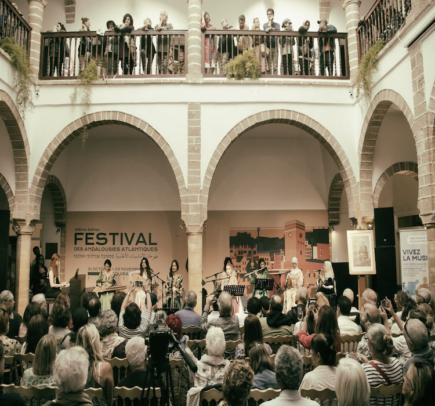
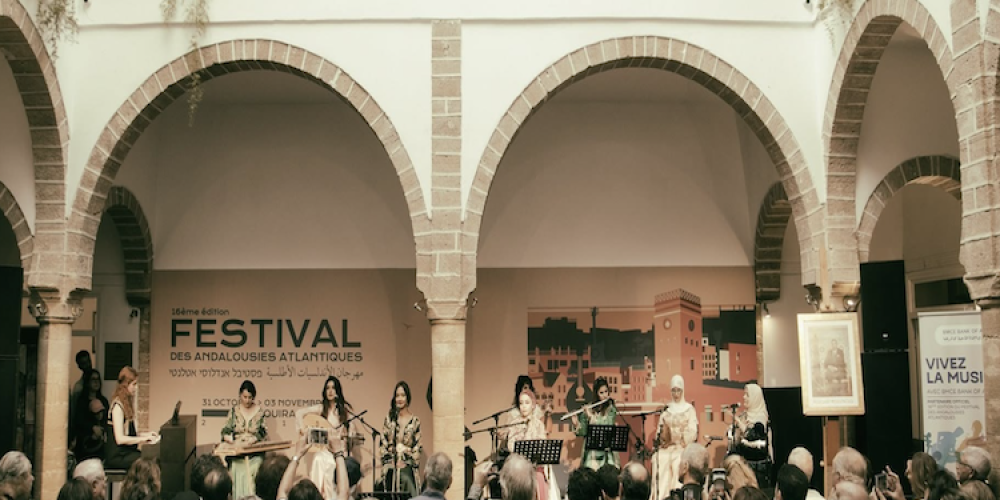
Festival des Andalousies Atlantiques | 21st Edition, October 29–31, 2026
On Morocco’s Atlantic coast, the historic city of Essaouira has long been a crossroads of civilizations, where Jewish, Muslim, African and Andalusian traditions have shaped an extraordinary cultural and musical heritage. Once known as Mogador, this enchanting coastal city is celebrated for its UNESCO-listed medina, whitewashed architecture, blue fishing boats, eighteenth-century ramparts and vibrant artistic community. Yet beyond its picturesque setting lies a remarkable history of cultural exchange, one that continues to resonate through the city’s music, festivals and enduring traditions.
For centuries, Essaouira served as an important Atlantic trading port connecting Morocco with Europe, the Mediterranean and sub-Saharan Africa. Under Sultan Mohammed III in the eighteenth century, Mogador developed into a prosperous commercial center, attracting merchants, artisans and communities from diverse cultural backgrounds. Its Jewish population played a particularly significant role in the city’s commercial and social life, contributing to a distinctive cultural identity in which Jewish and Muslim traditions developed alongside one another.
This shared heritage is reflected in Essaouira’s musical traditions. Andalusian melodies, Hebrew liturgical poetry, Moroccan Malhoun and the spiritual rhythms of Gnaoua music have all contributed to the city’s rich cultural landscape. Music became a powerful expression of collective memory, preserving traditions carried across generations and connecting communities through language, poetry and performance.
Today, Essaouira is internationally recognized as one of Morocco’s great cities of music. Its celebrated Gnaoua and World Music Festival, founded in 1998, brings together Moroccan Gnaoua masters with musicians from Africa, Europe and the Americas, while the Festival des Andalousies Atlantiques, established in 2003, celebrates the intertwined musical heritage of Morocco, Andalusia and the Mediterranean.
Each autumn, the Essaouira Andalusian Festival transforms the city into a gathering place for Andalusian orchestras, Moroccan Jewish singers, flamenco dancers, traditional musicians and contemporary artists. Concerts, cultural forums and intimate musical encounters illuminate the historical relationships between Jewish and Muslim communities, offering visitors an opportunity to experience Morocco’s diverse heritage through living musical traditions.
The 21st edition of the Festival des Andalousies Atlantiques takes place October 29–31, 2026, under the theme Alif × Alef: Two Letters, One Shared History. Featuring 15 concerts and artistic encounters, the festival celebrates more than two decades of musical dialogue and cultural collaboration.
André Azoulay and the Cultural Renaissance of Essaouira
At the heart of Essaouira’s modern cultural revival stands André Azoulay, senior adviser to His Majesty King Mohammed VI of Morocco, and one of the country’s most influential advocates for cultural dialogue and the preservation of Moroccan Jewish heritage.
Born in Essaouira in 1941, Azoulay has devoted much of his public life to promoting understanding between Jewish and Muslim communities and strengthening the historical ties connecting Morocco with the wider Mediterranean world.
His vision has been instrumental in restoring Essaouira’s international reputation as a city of artistic creativity, intercultural exchange and shared heritage.
In 1992, Azoulay established the Essaouira-Mogador Foundation for Arts, Culture and Heritage, helping initiate a cultural renaissance that placed music, historic preservation and artistic expression at the center of the city’s development.
Through the efforts of the Association Essaouira-Mogador and its cultural partners, Essaouira emerged as a destination for internationally recognized music festivals, exhibitions, scholarly discussions and artistic collaborations.
The creation of the Festival des Andalousies Atlantiques in 2003, at Azoulay’s initiative, was a particularly meaningful expression of this vision.
From its beginnings, the festival sought to bring Jewish and Muslim musicians together on the same stage, celebrating the shared Andalusian musical repertoire that has been preserved and enriched by Moroccan communities over centuries.
Its concerts are more than performances. They are encounters between musical traditions, generations and cultural identities, demonstrating how music can preserve historical memory while creating new forms of artistic expression.
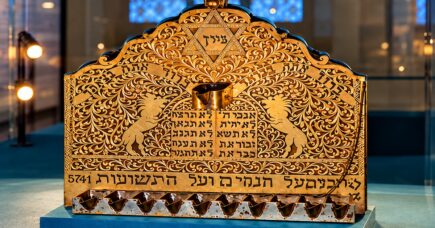
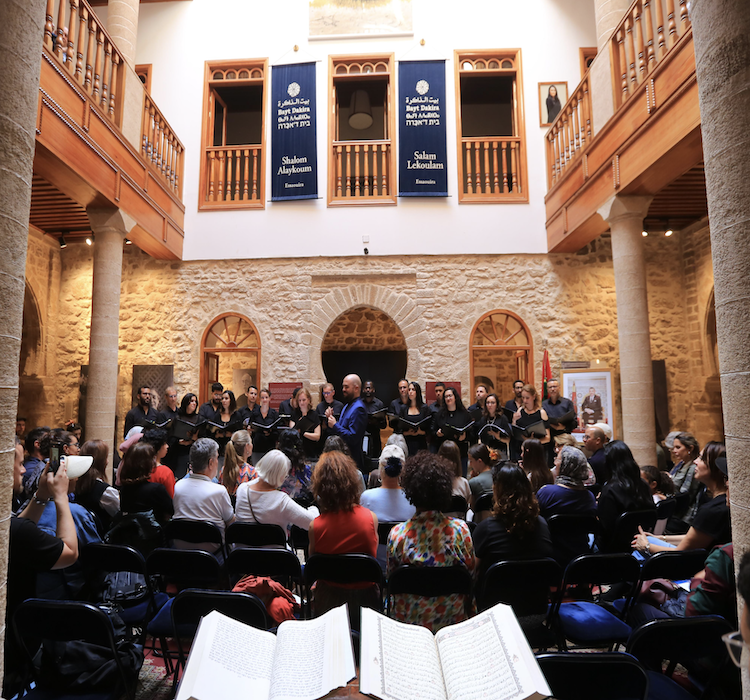
Azoulay’s commitment to safeguarding Morocco’s Jewish heritage is also reflected in Bayt Dakira, the House of Memory, a cultural and educational institution in Essaouira dedicated to preserving the history of the city’s Jewish community and the longstanding relationship between Jewish and Muslim Moroccans.
Located within the historic medina, Bayt Dakira has become one of the festival’s most meaningful venues, hosting cultural forums, discussions and musical encounters that explore the connections between heritage, identity and contemporary society.
Through these initiatives, Essaouira has become an international symbol of Morocco’s cultural diversity and a place where the country’s Jewish, Muslim, African and Andalusian traditions continue to be celebrated.
More Than Two Decades of Andalusian Musical Heritage
Since its establishment in 2003, the Festival des Andalousies Atlantiques has developed into one of Morocco’s most distinctive cultural gatherings.
Its mission is rooted in the recognition that Andalusian music belongs to a shared historical inheritance shaped by centuries of interaction between communities on both sides of the Mediterranean.
Following the migrations and expulsions from the Iberian Peninsula during the late medieval and early modern periods, Jewish and Muslim communities carried musical repertoires, poetry and artistic traditions to North Africa. In Morocco, these traditions continued to evolve, finding new expression in cities such as Fes, Tetouan, Rabat and Essaouira.
The festival celebrates this inheritance through performances that bring together classical Arabo-Andalusian music, Sephardic song, Hebrew Piyut, Moroccan Malhoun, Matrouz, flamenco and other Mediterranean musical traditions.
Over the years, its programming has featured internationally recognized artists alongside emerging Moroccan performers, creating opportunities for musical exchange across generations and cultural backgrounds.
The festival also maintains a longstanding partnership with the Fundación Tres Culturas del Mediterráneo, supported by the regional government of Andalusia, reinforcing the historical and artistic relationships between Morocco and southern Spain.
In 2025, the festival celebrated its 20th edition with more than 100 artists representing several countries, presenting a diverse program of concerts, flamenco performances, cultural discussions and artistic collaborations.
The 2026 edition continues this tradition with a program that places Moroccan Jewish musical heritage and the dialogue between Arabic and Hebrew cultural expressions at its center.
Essaouira’s Music Festivals: From Gnaoua to Andalusian Traditions
Essaouira’s identity as a city of music extends beyond a single festival.
The Gnaoua and World Music Festival has helped bring Morocco’s Gnaoua musical heritage to international audiences. Rooted in spiritual and ceremonial traditions influenced by sub-Saharan Africa, Gnaoua music is distinguished by the guembri, a three-stringed bass lute, metal qraqeb castanets, call-and-response singing and hypnotic rhythms.
The festival has become known for its collaborations between Gnaoua masters and international jazz, blues and world-music artists.
The Festival des Andalousies Atlantiques offers a complementary perspective on Morocco’s musical identity. Its focus on Andalusian orchestras, Jewish liturgical poetry, Sephardic traditions and flamenco highlights the country’s historical relationships with the Iberian Peninsula and the Mediterranean.
Together, these festivals reveal the many influences that have shaped Moroccan music, from African spiritual traditions to the classical repertoires of Al-Andalus.
For visitors, attending a concert in Essaouira is an opportunity to experience cultural history through living performance.
The 21st Edition: Alif × Alef — Two Letters, One Shared History
The 2026 festival takes place from Thursday, October 29, through Saturday, October 31, with concerts, cultural forums and artistic collaborations across Essaouira’s historic venues.
The theme, Alif × Alef, draws upon the first letters of the Arabic and Hebrew alphabets, offering a symbolic expression of the historical connections between Moroccan Jewish and Muslim communities.
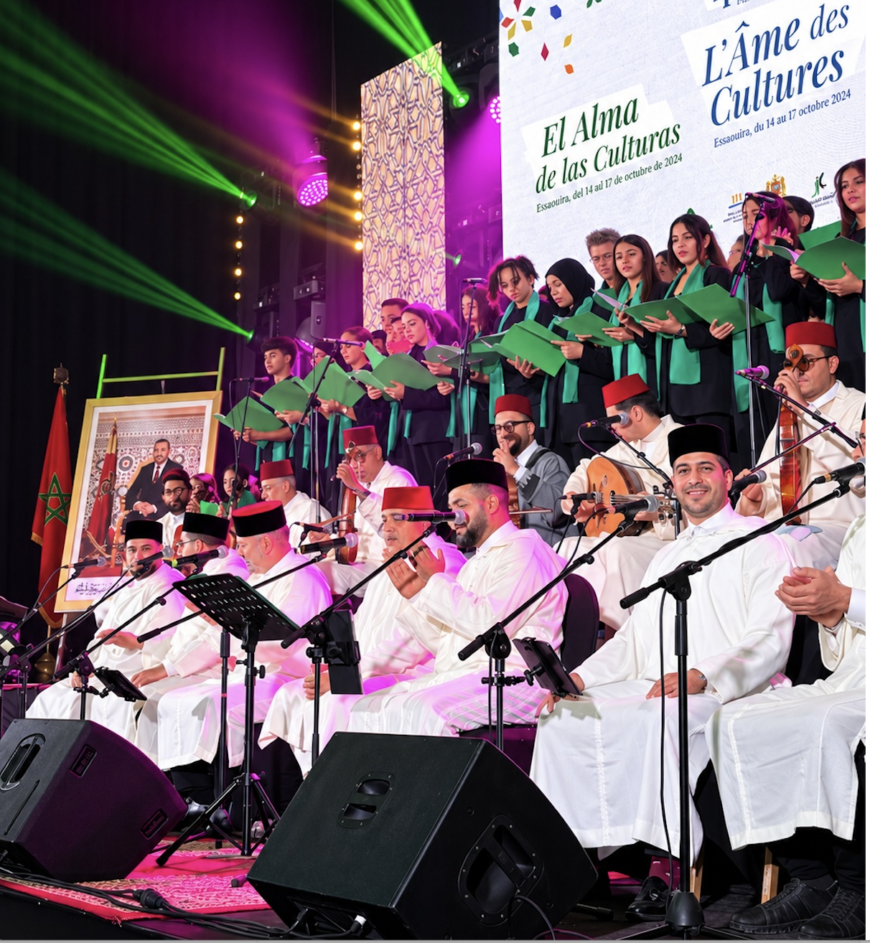
This year’s program brings together established masters and younger artists, with performances featuring Moshé Louk, Marouane Hajji, Nouhaila El Kalai, Mohamed Aaboud, Olga Pericet, the HaPiyut Ensemble and Maâlma Hind Ennaira.
A particularly anticipated event is the closing collaboration between Moroccan Jewish Piyut and Gnaoua music, bringing two distinctive spiritual and musical traditions together on the same stage.
Beyond the concerts, the festival includes the Forum des Andalousies at Bayt Dakira, where artists, intellectuals, researchers and visitors discuss cultural memory, identity and the importance of preserving shared heritage.
Essaouira Andalusian Festival 2026: Complete Concert Schedule
Thursday, October 29 — Opening Night
9:00 PM | Grand Chapiteau, Port of Essaouira
The opening concert brings together Moshé Louk and Marouane Hajji in a performance dedicated to Matrouz, the musical dialogue between Jewish and Arabic poetic traditions.
Moshé Louk, nephew of Rabbi Haïm Louk, makes his first appearance at the festival in Essaouira. Together, the performers pay tribute to Rabbi Haïm Louk and Abderrahim Souiri, two important voices associated with the festival’s history.
Nouhaila El Kalai returns to the stage where she first gained recognition as a young performer, sharing a duet with Marouane Hajji.
The Andalusian Orchestra led by violinist Elad Levi joins Moroccan musicians directed by Anass Belhachemi.
Midnight | Dar Souiri — HaPiyut Ensemble
The HaPiyut Ensemble brings together 18 artists from three generations to celebrate the musical heritage of Moroccan Jewish liturgical poetry.
Their performance reflects the transmission of sacred musical traditions across generations.
Friday, October 30 — Andalusian Music, Sephardic Memory & Malhoun
10:00 AM–1:00 PM | Bayt Dakira — Forum des Andalousies
The forum explores The Importance of Place, the Importance of Connection, bringing together artists, researchers, intellectuals, writers, journalists and festival visitors.
4:00–4:45 PM | Dar Souiri — Hamid Ajbar
The Breath of Al-Andalus presents a musical and poetic journey through Andalusian traditions, exploring love, exile, nostalgia and spirituality.
5:00–5:45 PM | Dar Souiri — Mohamed Aaboud
Mohamed Aaboud performs Andalusian songs, mawwal vocal improvisations and traditional repertoire from northern Morocco, including songs associated with women’s musical gatherings in Tangier.
Afternoon | Bayt Dakira — Mercedes Luján & Shira u’tfila
Spanish flamenco guitarist Mercedes Luján explores the contribution of women to flamenco guitar.
Shira u’tfila presents a performance exploring Sephardic memory through the history of a Haggadah preserved during the Second World War.
Evening | Grand Chapiteau — Moroccan Malhoun & Spiritual Music
Majda Yahyaoui and Souhaila Sahraoui perform with the Al Assala Orchestra of Meknes, directed by Rachid Lahkim.
The troupe of Lhaj Saïd Berrada joins the evening, presenting Moroccan Issawa musical and spiritual traditions.
11:00 PM | Grand Chapiteau — Samia El Antri
Samia El Antri returns to the festival stage where she first attracted attention as a young performer.
Midnight | Dar Souiri — Around the Table: Our Nouba Suites, Our Voices, Our Memory
The Matrouz Piyoutanim, directed by Avraham Edri, and the Madihiyine of Essaouira, led by Hamza Jorti, come together for an intimate, unamplified musical gathering.
Performing Andalusian noubas in Arabic and Hebrew, the musicians invite the audience to participate in an evening inspired by traditional communal singing.
Saturday, October 31 — Flamenco, Moroccan Jewish Music & Gnaoua
10:00 AM–1:00 PM | Bayt Dakira — Forum des Andalousies
The forum continues with discussions exploring cultural memory, heritage and shared identity.
4:00–4:45 PM | Dar Souiri — Marhba Blli Ja Andna
Meaning Welcome to Our Home, this performance brings together three Moroccan musical traditions.
Nouhaila El Kalai represents Fassi Chaâbi, Anass Belhachemi explores the Jbala musical tradition and Taqtoqa Jabalia, and Hicham Dinar interprets repertoire associated with Moroccan Jewish communities.
5:00–5:45 PM | Dar Souiri — Mohamed Aaboud
Mohamed Aaboud returns with Andalusian songs and traditional musical repertoire from northern Morocco.
Afternoon | Bayt Dakira — Mercedes Luján & Shira u’tfila
Further musical encounters explore flamenco guitar, Sephardic heritage and the preservation of musical memory.
Evening | Grand Chapiteau — Olga Pericet
Award-winning Spanish flamenco dancer and choreographer Olga Pericet makes her festival debut.
Recipient of Spain’s National Dance Award in 2018, Pericet presents a contemporary interpretation of flamenco rooted in Andalusian tradition.
Her performance concludes with a collaboration featuring Hamid Ajbar and his musicians.
10:45 PM–Midnight | Grand Chapiteau — Piyut & Gnaoua
The festival concludes with a special collaboration between the HaPiyut Ensemble and Maâlma Hind Ennaira.
The performance brings together Moroccan Jewish sacred poetry and Gnaoua musical traditions, creating a dialogue between two distinctive spiritual repertoires.
The Piyut singers interpret texts from Yaguel Yaakov, a collection of Jewish liturgical poetry associated with Morocco’s Abihssira family.
This musical encounter reflects the festival’s central vision: preserving individual cultural traditions while celebrating the historical connections that unite them.
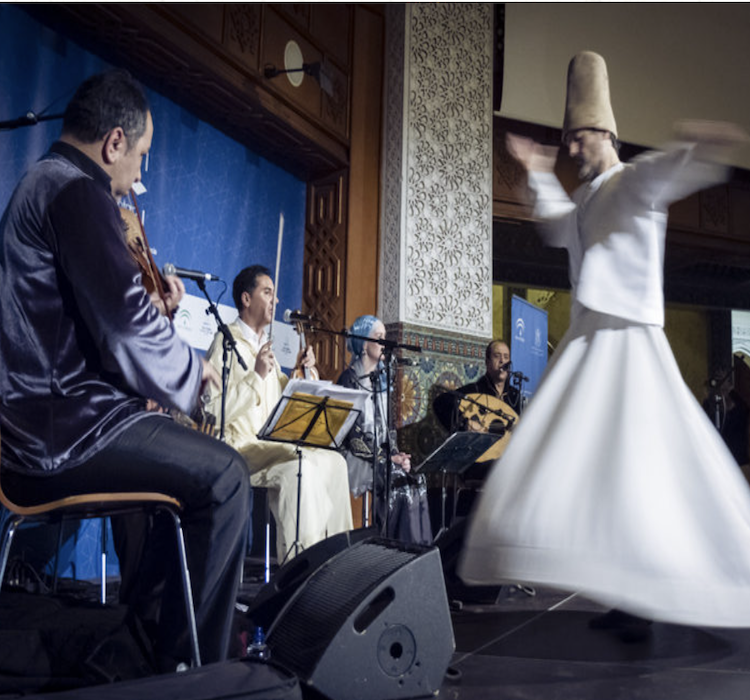
Understanding the Musical Traditions of the Festival
Arabo-Andalusian Music: A classical musical heritage shaped by centuries of cultural exchange between the Iberian Peninsula and North Africa, preserved and developed in Moroccan cities including Fes, Tetouan and Rabat.
Matrouz: A musical and poetic tradition bringing Jewish and Arabic repertoires into dialogue.
Piyut: Jewish liturgical poetry performed through melodic traditions preserved and developed by Jewish communities throughout North Africa and the Mediterranean.
Malhoun: A Moroccan poetic and musical tradition combining expressive vernacular poetry with traditional instrumentation.
Gnaoua: A Moroccan spiritual and musical tradition rooted in sub-Saharan African heritage, known for its distinctive rhythms, ceremonial practices and call-and-response singing.
Flamenco: An Andalusian art form combining dance, singing and guitar, shaped by multiple cultural influences.
Where to Attend the Festival in Essaouira
Grand Chapiteau — Port of Essaouira
The festival’s principal concert venue hosts large orchestral performances, flamenco productions and major evening concerts.
Dar Souiri
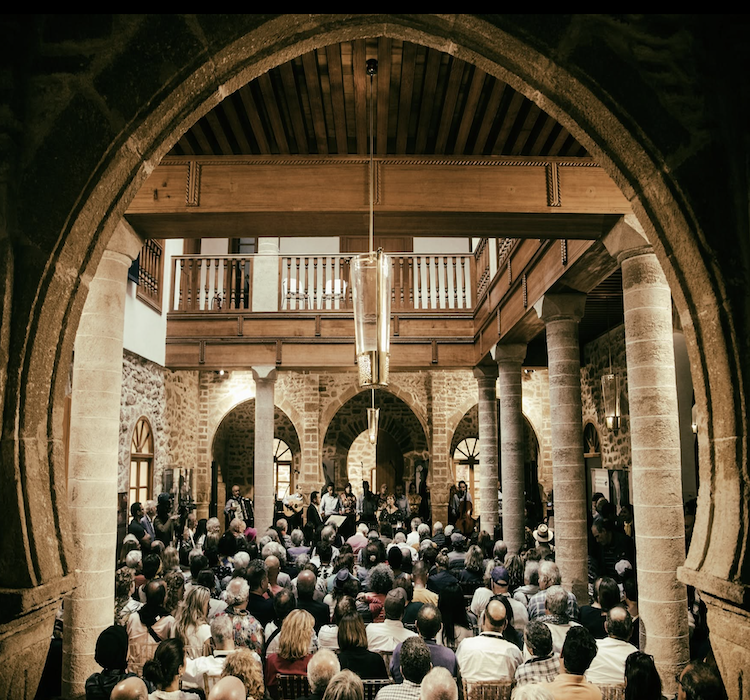
A historic cultural venue within Essaouira’s medina, Dar Souiri provides an intimate setting for Andalusian concerts, traditional music and late-night gatherings.
Bayt Dakira — House of Memory
Dedicated to preserving Essaouira’s Jewish heritage, Bayt Dakira hosts cultural discussions and musical encounters exploring the historical connections between Jewish and Muslim communities.
Essaouira Andalusian Festival Tickets & Reservations
The Festival des Andalousies Atlantiques offers a combination of complimentary and ticketed performances, with admission arrangements varying by venue and festival edition.
Major concerts, intimate musical gatherings and cultural forums take place throughout Essaouira, including at Dar Souiri, Bayt Dakira and the festival’s principal performance venue near the port.
Visitors are encouraged to reserve tickets in advance, particularly for popular evening performances and smaller venues with limited seating.
For current festival dates, concert schedules and ticket information, consult the Association Essaouira-Mogador, the festival’s organizing association.
Festival Information & Contact
Association Essaouira-Mogador – Dar Souiri
10 Rue du Caire, Medina of Essaouira, Morocco
Telephone: +212 (0)524 47 52 68
Email: secretariat@essaouiramogador.org
Follow the Association Essaouira-Mogador on its official Facebook and Instagram accounts for the latest festival announcements, concert schedules, and updates.
Planning Your Visit to Essaouira During the Festival
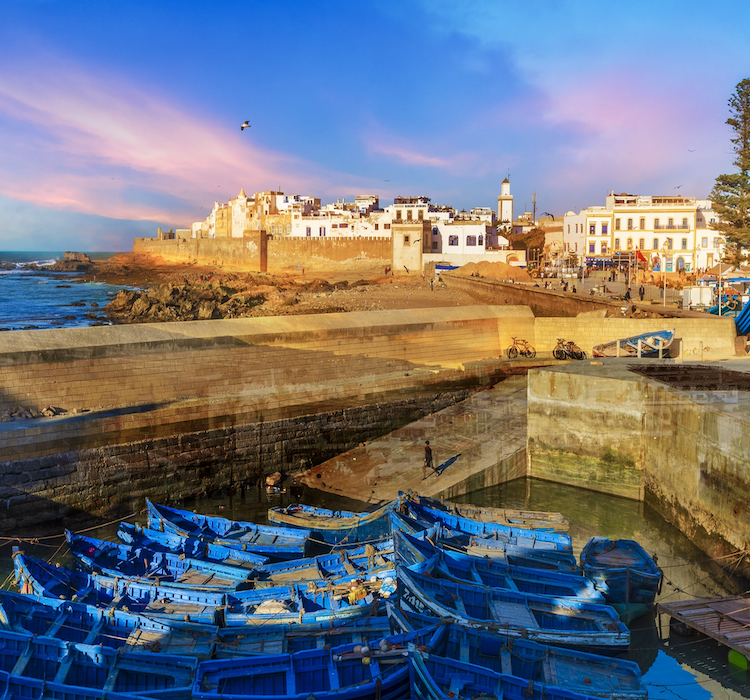
Late October is a wonderful time to explore Essaouira, when the Atlantic coast offers pleasant conditions for discovering the medina, historic ramparts, art galleries, traditional craft workshops and fishing harbor.
Visitors can combine festival performances with a guided exploration of the city’s Jewish heritage, including its historic Mellah, Jewish cemeteries, synagogues and Bayt Dakira.
Essaouira is approximately three hours by road from Marrakech and can be incorporated into a longer cultural journey through Morocco.
For visitors particularly interested in music and Jewish heritage, we recommend allowing at least two nights in Essaouira to enjoy the performances and explore the city’s historical landmarks without rushing.
Discover Essaouira’s Jewish Heritage with Travel Exploration
The Festival des Andalousies Atlantiques offers a rare opportunity to experience Moroccan history through living musical traditions.
For travelers interested in Jewish heritage, the festival is particularly meaningful, demonstrating how Jewish and Muslim musical traditions have influenced one another across generations.
Travel Exploration specializes in private, tailor-made Morocco journeys, including Jewish heritage tours, cultural experiences and guided explorations of Essaouira.
Our private journeys can incorporate Essaouira’s Jewish heritage, historic landmarks, local artisans and musical traditions into a personalized cultural itinerary.
Visitors interested in exploring the city’s remarkable Jewish history can discover its historic synagogues, Jewish Mellah, cemeteries and Bayt Dakira through Travel Exploration’s private Essaouira Jewish Heritage Tour, accompanied by a knowledgeable local guide.
Frequently Asked Questions About the Essaouira Andalusian Festival
When is the Essaouira Andalusian Festival?
The festival traditionally takes place in autumn. The 21st edition is scheduled for October 29–31, 2026. Future dates are announced by the organizers.
What is the Festival des Andalousies Atlantiques?
It is an annual cultural and music festival celebrating Andalusian, Moroccan Jewish, flamenco and other Mediterranean musical traditions through concerts and cultural encounters.
Who founded the Essaouira Andalusian Festival?
The festival was established in 2003 at the initiative of André Azoulay, senior adviser to King Mohammed VI, with the involvement of the Association Essaouira-Mogador.
Does the festival feature Moroccan Jewish music?
Yes. Moroccan Jewish musical traditions are central to the festival, including Piyut, Matrouz, Sephardic repertoire and collaborations between Jewish and Muslim musicians.
Where are the festival concerts held?
The principal venues include the Grand Chapiteau near Essaouira’s port, Dar Souiri and Bayt Dakira.
Is the Essaouira Andalusian Festival free?
Some events are free with advance registration, while others require paid tickets. Admission arrangements vary by venue and edition.
Can visitors attend the festival as part of a private Morocco tour?
Yes. Essaouira can be incorporated into a private cultural or Jewish heritage journey, particularly for travelers visiting Marrakech and Morocco’s Atlantic coast.
When will the 2027 festival dates be announced?
The dates and program for the 2027 edition have not yet been officially confirmed. Visitors should consult the Association Essaouira-Mogador for future announcements.
Experience Morocco’s extraordinary Jewish heritage beyond the festival. From Essaouira’s historic synagogues and Bayt Dakira to the Jewish quarters of Marrakech, Fes and Casablanca, Travel Exploration creates private, tailor-made journeys that bring Morocco’s Sephardic history and living cultural traditions to life.
Explore Private Morocco Jewish Heritage Tours